Most people don’t reach out to us because they need help choosing finishes. They reach out because something in their life has changed.
Perhaps they’re raising a young family and struggling to balance connection, privacy and daily routines.
Perhaps they’re entering a new chapter and looking to simplify, downsize or live more intentionally.
Perhaps they’ve achieved the home they once wanted, only to realize it no longer supports how they want to live today.
The home still works. But it no longer feels aligned.
These aren’t simply design problems. They’re life transitions.
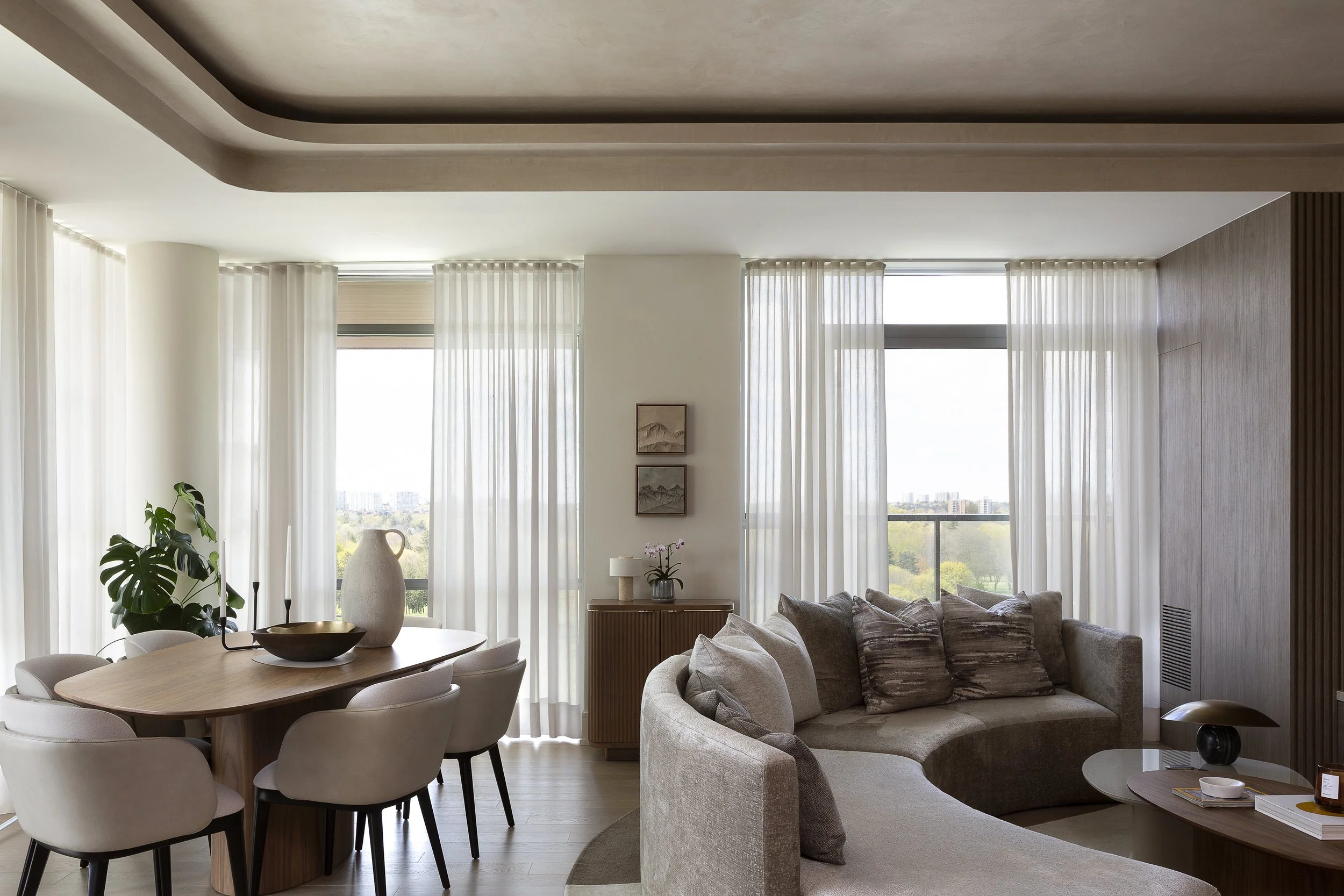
Wellness-centred interior design is about designing a home around how people want to live and feel—not simply how the space should look. It considers how planning, natural light, storage, materiality and the rhythms of everyday life can support greater comfort, clarity, connection and ease.
Because the spaces we inhabit shape our routines, influence our relationships and affect how we experience each day.
A well-designed home should do more than look beautiful. It should reduce friction, support daily rituals and create a sense of ease.
The way a home feels is often shaped by things we don’t consciously notice.
The quality of light throughout the day. The ease with which we move from one space to another. Whether there are places to gather, focus, retreat and restore. Whether the environment supports our natural rhythms or constantly works against them.
Some homes leave us feeling energized and connected. Others leave us feeling overstimulated, distracted or depleted, even when we can’t quite explain why.
Wellness-centred design considers these quieter layers of the home experience. It looks beyond aesthetics to create environments that support how we live physically, emotionally and mentally throughout the course of a day.
That’s why our work begins by understanding how our clients live, not just how they want their home to look.
The answers are rarely about aesthetics alone.
People want more calm.
More clarity.
More connection.
More time together.
Design becomes the tool that helps make those things possible.
Wellness-centred design isn’t about following a trend or creating a particular aesthetic.
It’s about creating homes that support the people who live within them.
Homes designed not only to look good, but to help us live well.
